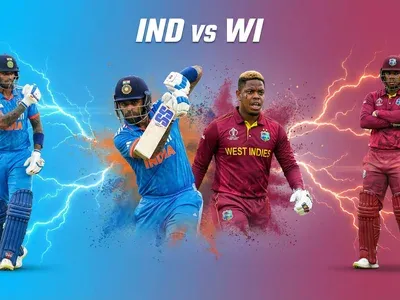
India are slight favourites: India 56%, West Indies 44%. My simulated score range is roughly India 195–215 batting first, with Hyderabad’s batting-friendly history and both teams’ explosive recent scores making a high-scoring game plausible. These are judgment-based estimates—not bookmaker odds or a guarantee—and could shift after the toss and confirmed XIs.
India lead the series 2–1. The first three matches produced very different conditions: India chased 172 comfortably in Lucknow, West Indies chased 250 in Ranchi, and India defended 223 in Indore. That makes the venue and matchup details more useful than simply extrapolating the series score.espn+2
Hyderabad pitch and conditions
-
Hyderabad has hosted only three T20Is in the venue stats retrieved; teams batting first won one and chasing teams won two. The listed average first-innings score is 230, but that figure comes from a very small sample and shouldn’t be treated as a reliable standard par score.cricbuzz
-
The venue’s T20I record includes India chasing 208 against West Indies in 2019, and India chasing 187 against Australia in 2022. Those results show that a big target can be chaseable here, but they’re too few matches to make the toss decisive by themselves.sportsadda
-
Forecasts available now suggest dry, sunny conditions on October 14; that points to little rain risk, though the forecast could change before match day.weather.metoffice.gov+1
-
Given the recent matches, a plausible toss call is to bowl first if dew becomes evident. In the first three games of this series, the chasing team won twice; India’s third-match win showed a strong bowling performance can still defend a total.espn+1
Abhishek Sharma vs West Indies
Abhishek is the leading powerplay threat. ESPN’s match preview lists him at 340 runs in nine matches, averaging 37.77 at a strike rate of 237.76; in the third T20I, he made 69 off 30, including a 50 from 18 balls.espn+1
West Indies have a useful counter: vary pace and use the short ball rather than offering him predictable length. In Indore, Shamar Springer dismissed Abhishek with a short delivery after India’s powerplay surge, while ESPN noted that Abhishek had adjusted his approach against off-spinner Roston Chase before accelerating.espn+1
Simulation: Abhishek’s central outcome is around 30–45 runs, with a substantial chance of a quick 50-plus if he gets through the first few overs. His risk rises if West Indies attack him with well-directed short balls or bring spin on early and make him generate power against the turn.
Mayank Yadav vs West Indies
Mayank is listed in India’s squad for the fourth T20I. ESPN’s preview gives him seven wickets in three matches, with a 9.54 economy rate and 9.4 bowling strike rate. His recent figures were 1/40 in the opener and 0/34 in the third match; the preview says he took two wickets in his first over in Ranchi.espn+2
His matchup is high-variance: pace can trouble batters who look to swing across the line, but West Indies’ hitting can punish any missed length. In Indore, Mayank was economical but went wicketless; that underlines why his value may depend more on early breakthroughs than on simply bowling fast.espn
Simulation: I’d put Mayank at roughly a 40% chance of taking two or more wickets, with 0–1 wickets the more likely individual outcome. If he strikes in the powerplay, India’s win chance rises; if West Indies get through his opening spell without losing wickets, their explosive middle order keeps the match close.
Final call
Pick: India, narrowly. The key swing is the first six overs: Abhishek’s start against West Indies’ pace plans, followed by Mayank’s opening spell against the visitors’ top order.
